 >
>

China Perspective Issues
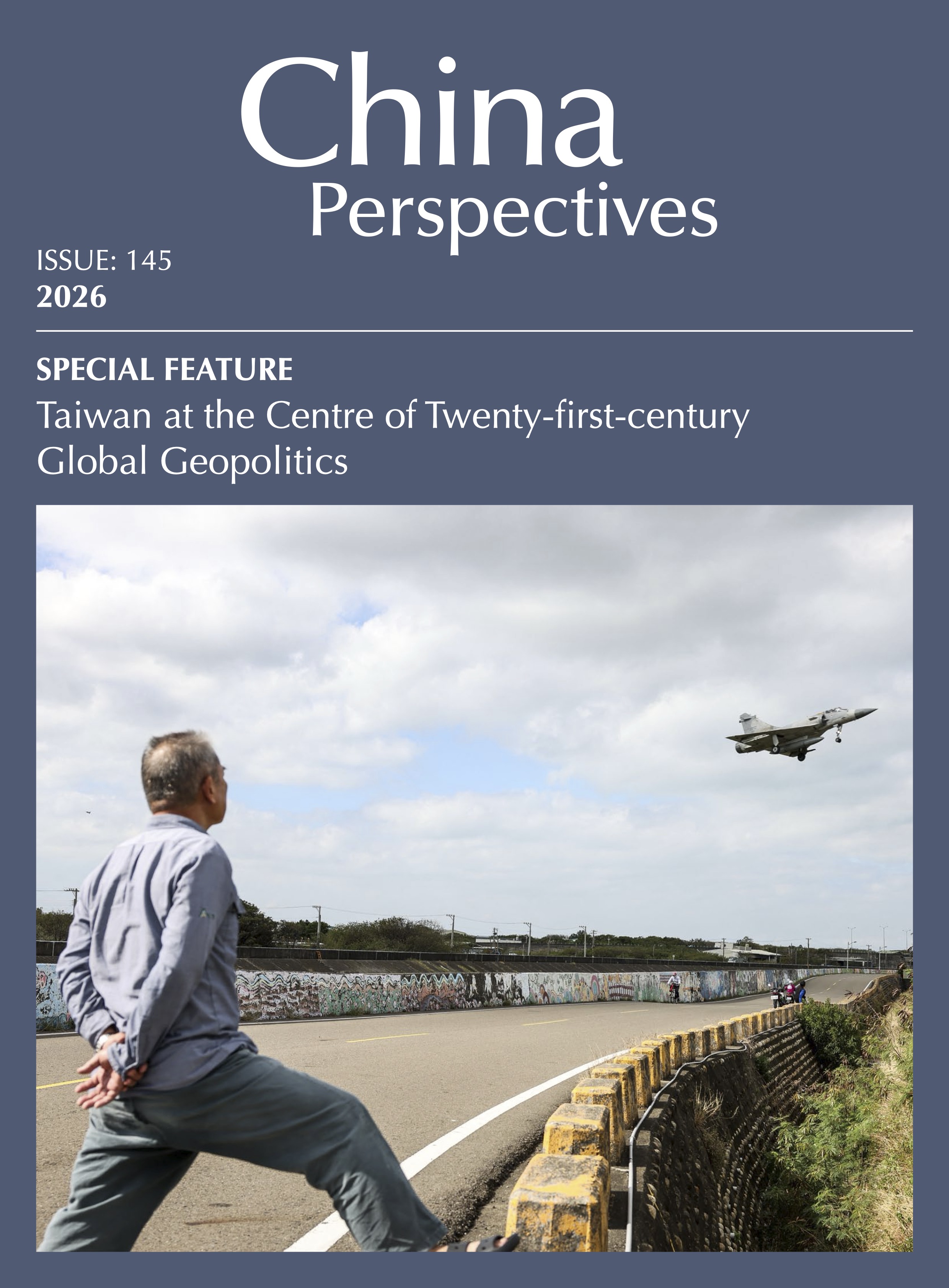
China Perspectives 145
SPECIAL FEATURE 2026
Taiwan at the Centre of Twenty-first-century Global Geopolitics
- SPECIAL FEATURE
- Book Reviews
What is Driving the US and China to Compete – and Potentially Fight – Over Taiwan: A Neo-offensive Realist Analysis
Great power competition has long been theorised by international relations scholars as a contest for supremacy across multiple domains. But where do great powers compete? What makes a place a critical domain of great power competition? What motivates great powers to compete – and potentially fight – over one domain but not others? This article uses an emerging theory called “neo-offensive realism” to examine how conflicting national interests are currently driving the US and China to intensely compete and potentially fight over Taiwan. By empirically surveying the defence, economic, ideological, and world-order interests of the US and China over Taiwan, this article develops a theoretical framework for mapping the different national interests that structure great power competition over states and quasi-states. The neo-offensive realist analysis of US–China rivalry in Taiwan provides important theoretical and practical insights for the international community.
Ideological Interests and US Support for Taiwan: A Structural Analysis of Hegemonic Competition
Through the lens of hegemonic competition, this article examines how the ideological dimensions of US interests have shaped its support for Taiwan from the Cold War to the New Cold War. A longitudinal case study and discourse analysis revealed that shifts in US competition with other major powers have shaped Taiwan’s ideological significance across different historical periods – from an anti-communist stronghold in the early Cold War and a model of capitalist modernisation in the late Cold War, to a beacon of democracy in the post-Cold War era and a frontline against authoritarian expansion in the new Cold War. Theoretically, the study underscores the role of ideological interests alongside security and economic factors, offering a systematic discussion on the interplay between geopolitical-economic logic and ideological considerations. Empirically, it provides insights in respect of the ideological dimensions of US foreign policy, informing the value-based public diplomacy strategies of Taiwan and other liberal democracies.
Keywords: hegemonic competition, ideology, foreign policy, United States, Taiwan.
Taiwan’s Economic Nexus in US–China Competition: An Economic Interest Perspective
XIE, Zhuoxiao. 2024. Chinese Daigou: An Ethnography of Brokerage Practices and Mobility Politics in Globalized China. Singapore: Palgrave Macmillan.